
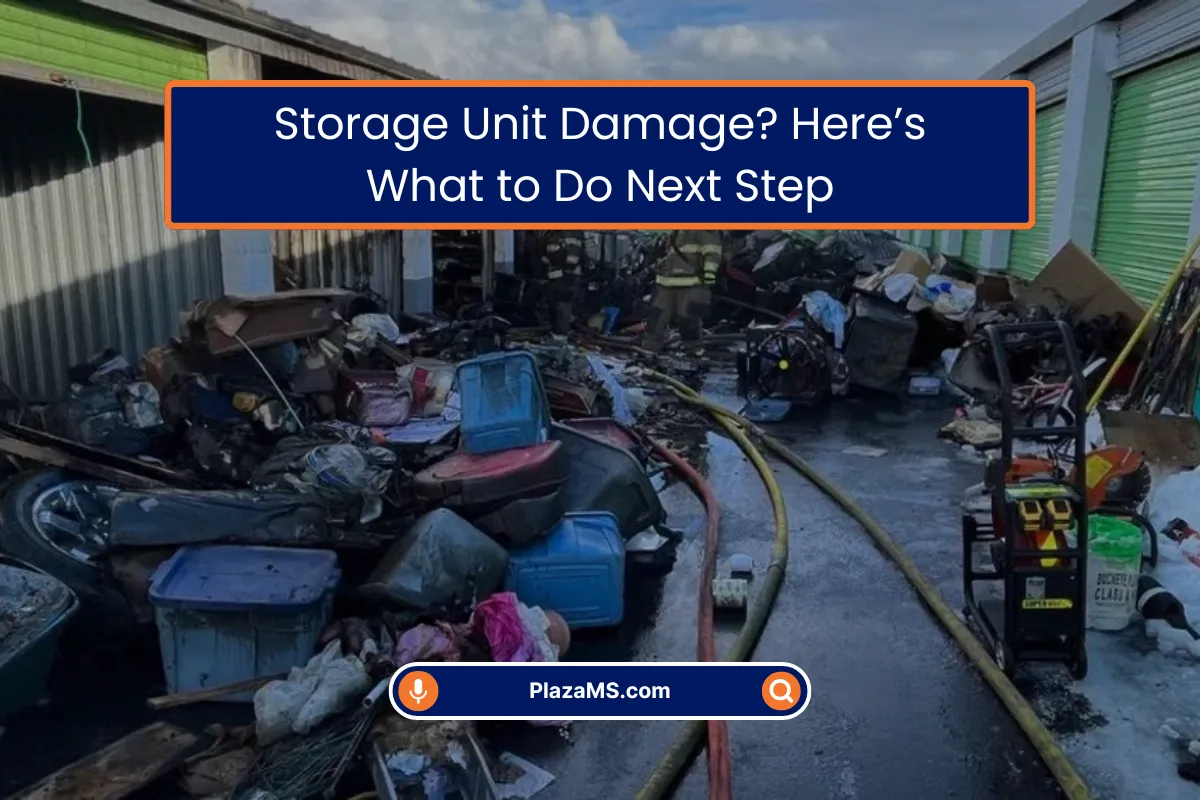
I hate that for you. Seriously. You open that door, maybe you hear a crunch under your foot, or you get a whiff of that unmistakable damp, sour smell of mildew. Your heart just drops, doesn’t it? That’s not just a box of old jeans. That’s your Christmas decorations, your kid’s baby clothes, your vinyl collection.
It feels like a violation. You paid for that space to be safe, and it let you down.
Alright, first thing? Don’t just start chucking things around in a panic. I know you want to. But trust me, that’ll make it worse. Let’s take a deep breath together and handle this one smart step at a time. I’ve talked to more customers through this than I can count, and this is the playbook.
Step 1: Be a Paparazzo, Not a Cleaner
Your phone is your best friend right now. Before you touch a single soggy box or move a chewed-up chair, you need to document everything.
- Take a video: Start from the doorway and slowly pan across the entire unit. Get the ceiling, the walls, the floor. Narrate it if you want—”Okay, it’s May 16th, and I’m just opening my unit, and you can see water all over the floor…”
- Now, get snap-happy: Take close-up pictures of everything. The water stain on the wall. The specific damage to your couch. The mouse droppings are behind the boxes. The more, the better. This isn’t just for you; this is your evidence.
- Write it down: Open the notes app. What do you see? What do you smell? Is it humid? Does the wall feel wet? Jot it all down with the date and time. Your memory will get fuzzy on the details later, I guarantee it.
This step is boring, but it’s the most important thing you’ll do. It’s your ammunition.
Step 2: Play Sherlock Holmes (But for Leaks)
Now you can poke around a little. Carefully. We need to figure out the “why.” This decides who you need to talk to.
See a brown stain on the ceiling?
Look right above it. Is there a rusty pipe? A crack in the roof seam? That’s a facility maintenance issue.
Does everything just feel generally damp and smell funky?
That’s often a moisture and ventilation problem. This is why we’re such sticklers for climate-controlled units at our own place, SafeKeep Storage. It just takes the guesswork and worry out of the equation.
Find little black rice-like droppings or shredded paper?
You’ve got pests. Check the edges of the door and the walls for tiny gaps where they could be getting in.
Step 3: Go Talk to the Manager (Leave the Pitchfork at Home)
Time to head to the office. Now, go in calmly. I know you’re mad, but going in hot will just make them defensive. Be factual.
Say, “Hey, I need to report some damage in my unit. I’ve found a pretty significant leak, and I’ve got some water damage. Can you come take a look with me?”
Show them your photos. Point out the source. A good facility will want to know this stuff immediately—it could be affecting other units.
This is key
Ask them to write up an incident report. Get a copy. If they won’t give you one, take a picture of it with your phone. This officially records that you reported the problem on this day. It’s a paper trail.
Step 4: The Really Unfun Part: Reading Your Contract
Ugh, I know. But you gotta dig out that rental agreement. The answer to “who’s gonna pay for this?” is buried in there.
- Look for the section called “Liability” or “Limits of Liability.” Read it slowly. The honest truth is, most facilities aren’t responsible for things like floods or pests unless they were directly negligent (like if you told them about the roof leak three months ago and they did nothing).
- Your insurance is your hero here. Please tell me you got the insurance. Either through the facility, your renter’s policy, or a third party. Find that policy document. Now. That’s what’s going to save you. See what it covers—water, mold, vermin—and what your deductible is.
If you skipped insurance… oof. That’s a tough, expensive lesson. I don’t say that to make you feel bad; I say it because I never want any of our customers at SafeKeep to be in that spot. That’s why we talk about it so much during sign-up.
Step 5: Picking Up the Pieces
After you’ve done all the above, you can start cleaning.
- Wear gloves and maybe a mask. Mold and mouse poop are no joke.
- Be ruthless. Some stuff is just a lost cause. It’s okay to mourn it and then toss it.
- For things you want to salvage, act fast. Get wet stuff dried out within a day or two to stop mold in its tracks.
Look, prevention is way easier than this mess
Next time, use plastic bins, not cardboard. Always, always get your stuff up on pallets or shelves off the concrete floor. And if you’re storing anything you even remotely care about, just get the climate-controlled unit. It’s worth every single penny for the peace of mind.
I’m really sorry you’re dealing with this. It’s a massive hassle. But you’re not alone, and by being methodical, you can get through it.










0 Comments