
Look, I know how it happens. You buy one comic. Just one. Maybe it’s an issue you loved as a kid. Then you find another. Then you discover a local shop that has a back issue you have been hunting for years. Next thing you know, you have boxes stacked in every corner of your apartment and your spouse is giving you the look.
I have been there. Most of us who collect have been there.
The problem is, our homes were not designed to house collections. They were designed for couches and refrigerators and beds. So we shove our stuff into closets. We slide boxes under the bed. We stack totes in the garage because, hey, it’s out of the way, right?
Here is what I wish someone had told me years ago before I learned the hard way: where you store your collection matters just as much as what you collect.
Let me explain what I mean.
Why Your Garage Is the Worst Place for Comics
I am not being dramatic. Think about what happens in a garage. Summer hits and it turns into an oven. Winter comes and it is freezing cold. Humidity rolls in and out like tides. Paper does not handle that well. It expands. It contracts. The fibers break down over time. Pages that were white when you put them in the box come out looking like old newspaper.
I had a friend who stored about twenty long boxes in his parents’ garage while he was between apartments. He thought it was temporary. Eight months later when he went to get them, the boxes had sagged from moisture. The bottom row of comics had that wavy, water-damaged look. Some of them had mold spots on the covers. He lost thousands of dollars in value because he did not think about the environment.
So if you are storing at home, you want interior closets. Nothing against exterior walls. Nothing in the attic unless you live in a place that stays cool year round. Attics are death for paper products.
If your collection has grown past what your home can handle, you need a storage space that is climate controlled. Not just a metal box with a door. You need temperature regulation. You need humidity control. That is not being fancy. That is protecting your money.
Bags and Boards: Do Not Cheap Out Here
Now let us talk about bags and boards because I see people getting this wrong all the time.
You walk into any comic shop and they have those cheap poly bags. They are fine for shipping. They are fine for giving away free comics on Free Comic Book Day. But for your collection? For stuff you actually care about?
Mylar. That is what you want.
Mylar bags are thicker. They do not break down over time. Poly bags will eventually yellow and get brittle. Some of them even react with the paper after enough years. Mylar stays clear and stable basically forever. Yes they cost more. But are you trying to save forty bucks on bags for a collection worth thousands? Do the math.
Same goes for boards. Get full backs. Not those half boards that leave the back of the comic exposed. And here is a little trick I learned: change your boards every few years even if the bags look fine. Boards absorb acid from the paper over time. That is literally their job. But once they are saturated, they stop protecting and start contributing to the problem.
When you bag a comic, slide it in gently. Do not jam it down. The board should be flush with the edge of the bag. The comic should sit square. If you are forcing it, you are bending the spine. That spine bend is visible. It kills grade value instantly.
Long Boxes vs. Short Boxes: Pick the Right One
Boxes are another thing people mess up.
Long boxes hold a lot. I get the appeal. But let me tell you from experience, a full long box is heavy. Like, really heavy. If you ever have to move, you will regret using them. Your back will hate you. Your friends who help you move will hate you.
More importantly, long boxes get stacked. People stack them three or four high. The bottom box takes all that weight. The cardboard starts to bow. The weight transfers to the comics inside. You end up with warped books at the bottom of that stack. Maybe you do not notice right away. But years later when you pull them out, you see it.
Short boxes are the way to go. They hold about 150 books. You can carry them with one hand. They stack safely. They are easier to organize and label. Just do it.
Never Put Boxes Directly on Concrete
And for the love of everything holy, do not put boxes directly on concrete.
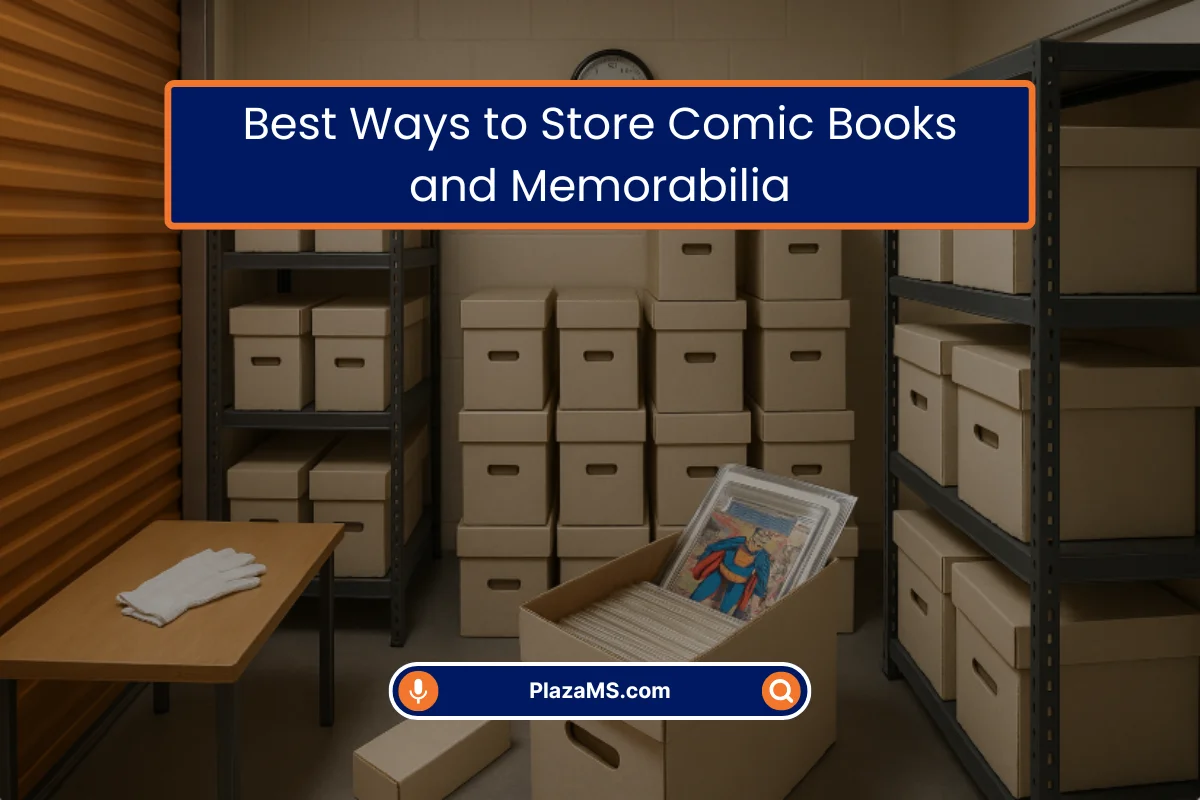
Concrete sweats. You might not see it. The floor might look dry. But moisture moves through concrete. Put a piece of plywood down. Put a pallet down. Get some cheap shelving units and get the boxes up off the floor. Air needs to circulate underneath. If you skip this step, you are asking for moisture damage.
Memorabilia Needs Its Own Rules
Comics are paper. Easy to understand. But memorabilia? Action figures. Statues. Props. Costumes. Signed posters. Each one needs its own approach.
Action Figures and Statues
If you collect action figures or statues, keep the original packaging. I know it takes up space. I know it is annoying to store empty boxes. But those clamshells and foam inserts were designed specifically to protect the item. If you throw them away and toss the figure loose into a plastic tote, something will break. Arms snap off. Paint rubs off. Weapons get lost. The packaging is part of the preservation.
Posters and Art
For posters and art, avoid poster tubes for long term storage. Tubes are fine for moving. But if you leave a poster rolled in a tube for years, it never flattens out again. You end up with curling that makes framing difficult. Use flat storage. Archival sleeves. Portfolio cases. If you frame something, make sure the matting is acid free. Regular cardboard matting leaves a yellow border around your art over time. Permanent damage.
Textiles and Costumes
Textiles are tricky too. Costumes. T-shirts. Capes. Do not hang them on wire hangers. The wire creates pressure points. The shoulders get distorted. Fabric stretches. Fold them. Use acid free tissue paper. Store them in plastic bins that seal tight to keep dust and bugs out.
Label Everything (Yes, Everything)
You pack everything perfectly. You move it to storage. Six months later you want to read that specific run or show someone that signed poster. Now you are digging through boxes. Pulling things out. Shifting stacks. Putting things back wrong. Every time you handle your collection, you add wear.
So label everything.
Not just on top. Label the sides too. Because when you stack boxes, you cannot see the top. Label every side so you can read it no matter how the box is oriented.
Better yet, keep an inventory. A spreadsheet works fine. Write down what is in each box. Box A has Silver Age Marvel issues 1 through 50. Box B has the signed posters. Box C has the statues. Then when you need something, you grab one box. You do not touch the others. Less handling means less risk.
I also tape photos to the outside of totes. Take a picture of what is inside, print it, tape it to the lid. That way I can see at a glance without opening anything.
Security: Think About It Before Something Happens
Your collection has value. Maybe it is monetary. Maybe it is sentimental. Either way, it matters to you.
If you are storing at home, think about where it is. Is it visible from a window? Is the door to that room lockable? Basic stuff.
If you are using a storage facility, do not just pick the cheapest place with a gate that is always broken. Look for key code entry. Look for individual unit alarms. Look for staff on site. A facility that has someone there during the day is a different level of security than one that is completely automated and nobody pays attention to.
I am not trying to scare you. But I have heard too many stories from collectors who lost things because they did not think about security until it was too late.
A Quick Check on Your Current Setup
You collected these items because they mean something to you. Maybe it is nostalgia. Maybe it is investment. Maybe you just like having cool stuff around. Whatever the reason, you put time and money into building your collection.
Do not let poor storage ruin that.
Walk through your space right now. Look at where your boxes are sitting. Are they on a concrete floor? Are they in the garage? Are they stacked so high that the bottom boxes look like they are struggling?
If yes, fix it. Move them. Rebag them. Get them off the floor. Find a space that actually protects them instead of slowly damaging them over time.
We have helped a lot of collectors over the years find spaces that actually work for their collections. Climate controlled units. Secure access. Shelving options to get boxes off the floor. If your home has run out of room, it might be time to look at alternatives. Your collection deserves better than the garage floor.
Take care of your stuff. Future you will thank you when you pull out a book thirty years from now and it looks exactly like it did the day you put it away.










0 Comments